



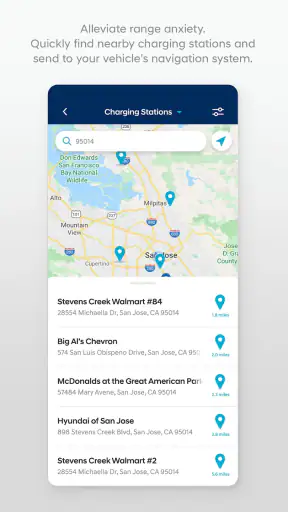
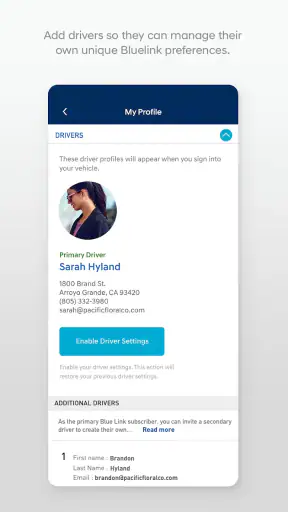
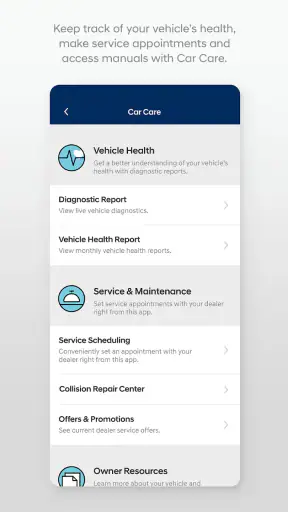
My first impression of MyHyundai with Bluelink was that it is most useful when I treat it as a remote companion for a compatible Hyundai vehicle, not as a complete replacement for the car’s controls. It brings vehicle-related tasks into the phone, which can be especially convenient when I am indoors, carrying bags, dealing with poor weather, or trying to prepare for a trip before walking out to the parking area.
That convenience also comes with an important condition: the experience depends on having a Bluelink-equipped Hyundai and an active connection between the vehicle, the service, and the phone. When that setup is working, the app can reduce small daily hassles. When it is not, a traditional key, the vehicle’s own controls, or direct help from Hyundai may still be necessary. I found that distinction important when judging the app fairly.
How the app feels to use in everyday situations
Readability and navigation are strongest when the task is simple
The app belongs to the productivity category, although I would describe its real role as vehicle management. Its purpose is focused rather than broad: I open it because I want to interact with my Hyundai, check a vehicle-related status, or begin a remote action. That narrow purpose is helpful because I do not have to search through unrelated tools or content before reaching the reason I launched it.
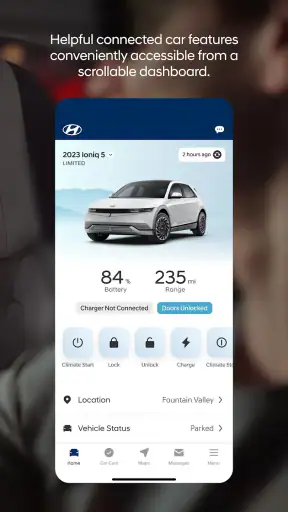
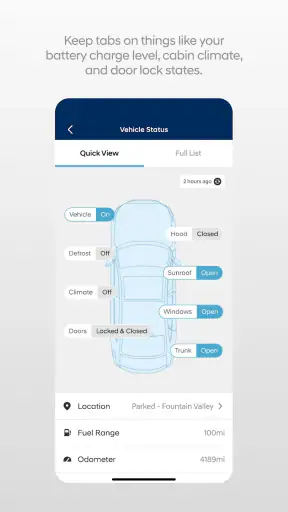
For me, the best workflow is to open the app with one clear goal already in mind. If I am preparing to leave, I want to check the vehicle and handle the relevant remote function without wandering through menus. If I am trying to remember whether I left the car in a particular state, I want the answer to be easy to locate rather than hidden behind several layers of navigation.
This matters for readers who find dense interfaces tiring or who use a phone with enlarged text. A short, task-focused app can be easier to understand than a general-purpose automotive platform packed with news, shopping, maps, maintenance articles, and promotional panels. MyHyundai is more useful when I approach it as a practical control panel instead of a place to browse.
There is still a learning curve. Remote vehicle services often use terms that make sense to experienced owners but may be less obvious to someone who has just bought a Hyundai. I recommend spending a quiet moment learning where the main vehicle actions and status information live, rather than trying to understand the interface for the first time in a hurry. That small preparation makes the app less stressful when I am standing outside in rain or rushing to an appointment.
The app is free, which removes one obstacle for owners deciding whether it is worth trying. Hyundai Motor America develops it, and its broad adoption is reflected in an average rating of 4.6 from around 116 thousand ratings, with more than a million installs. Those figures suggest that it is not an obscure experiment, but they do not guarantee that every owner will have the same experience. Vehicle compatibility, account setup, network conditions, and the exact services available to a particular car still shape the result.
Motor and sensory considerations change where the app helps most
The clearest benefit I noticed is that the phone can move certain vehicle interactions away from the physical car. That can help someone who finds repeated walking, reaching, bending, or pressing small controls uncomfortable. It can also be useful for a person recovering from an injury, a driver with limited hand strength, or anyone who wants to complete a simple task before approaching the vehicle.
That does not mean the app removes every physical demand. I still need to use the phone, interpret the result, and complete any part of the task that remains tied to the vehicle itself. Remote access is therefore best understood as reducing some steps, not eliminating the need to interact with the car. For a person with significant motor limitations, the practical question is not simply whether the app has a remote function, but whether the entire journey from opening the app to entering the vehicle is manageable.
People with visual or cognitive accessibility needs may appreciate a focused workflow, but I would not assume that every screen will feel equally comfortable. Text size, contrast, touch-target size, and the clarity of status messages can make a major difference, especially outdoors. I found it sensible to use the phone’s own display and accessibility settings where needed, then test the app in the conditions in which it will actually be used.
Voice interaction can be useful for reducing tapping on a phone, but I would not rely on voice alone for a vehicle task unless the phone’s operating-system tools clearly support the action. A spoken command may open the app or help with navigation, while the final confirmation may still require visual review and touch input. That is a reasonable safety habit: I want to know exactly what I requested before assuming the vehicle has responded.
Auditory feedback is also not something I would treat as the only confirmation. A user who is deaf or hard of hearing, someone in a loud street, or a person who simply misses notification sounds should look for a visible status change rather than depending on an alert tone. Conversely, a user with low vision may prefer spoken phone feedback but still need a clear, persistent visual state to confirm what happened. The app is most inclusive when I combine its information with the phone’s built-in accessibility tools instead of expecting one signal to work for everyone.
Situational access is where the service earns its place
One realistic example is a cold morning. I am inside, already wearing gloves, and do not want to stand beside the car while trying to operate a small physical control. I can use the phone first, then walk outside once the vehicle is ready for the next step. The value is not dramatic every time, but repeated small conveniences can make ownership feel less demanding.
Another example is a crowded parking area. I may not remember exactly where I left the Hyundai, or I may be carrying groceries and want to avoid unnecessary trips back and forth. The app can be useful as part of that routine, although I still need to pay attention to the vehicle and surroundings rather than looking at the phone while walking.
For caregivers and families, the app can offer a way to handle a vehicle-related check without physically reaching the car first. That may help when a driver has limited mobility or when weather makes an outdoor trip difficult. I would still be cautious about sharing account access casually. A remote vehicle app should be treated as sensitive, and each person using it should understand which actions they can perform and when a physical key or direct communication is safer.
It can also help people who organize their day around strict transitions. A parent leaving work, a commuter moving between appointments, or a driver preparing for an early departure may benefit from completing a vehicle task before reaching the parking lot. The app is less valuable for someone who parks close to home, rarely needs remote interaction, and is already satisfied with the key and the controls inside the car.
Compared with ordinary alternatives, the main advantage is convenience at a distance. A physical key is dependable for basic access but cannot provide the same phone-based workflow. The vehicle’s built-in controls are often direct and familiar once I am seated, but they do not help me prepare from indoors. A general automotive app from another brand is not a meaningful substitute because its usefulness depends on the vehicle ecosystem it supports. For a Hyundai owner with Bluelink, the official app is the logical place to start; for a person without a compatible vehicle, it has little practical value.
What can still create friction
The biggest limitation is that this is not an independent tool. It relies on a compatible Hyundai, a properly configured Bluelink relationship, a functioning phone, and communication with the vehicle. If any link in that chain is unavailable, the app may not be able to complete the task when I need it. That is why I would never make it my only way to access or manage the car.
Remote actions can also feel slower or less predictable than pressing a control directly in front of me. A physical action gives immediate tactile feedback. With a phone, I may need to wait for the request and then verify the result. That extra pause is not necessarily a flaw, but it changes how I use the app. I avoid tapping repeatedly because impatience can make it harder to tell which request actually went through.
Network conditions are another practical concern. A basement garage, a rural road, a crowded event, or a phone with weak service can turn a straightforward task into a frustrating one. I recommend checking the vehicle before leaving a place where access may be difficult, rather than assuming a remote command will always be available at the last second. This is one of those habits that matters more than the feature list.
There is also a security and privacy trade-off whenever a phone becomes connected to a vehicle. I would protect the phone with its normal lock and avoid leaving an account signed in on a shared device. People who have trouble remembering passwords may find account recovery particularly frustrating, so keeping login details organized through the phone’s secure tools can make ownership easier without writing them on a loose note.
The current version is 5.4.4, and the app has been available since July 28, 2014. A long presence is reassuring because the service is established rather than brand new, but longevity does not remove the need for occasional interface changes or account maintenance. After an update, I would test the functions I actually depend on instead of assuming that a familiar screen behaves exactly as before.
Some users may also find the app unnecessary if their needs are purely physical and immediate. If I am already beside the car, the key or the vehicle’s own controls may be faster. If I want a complete trip planner, a dedicated navigation app may be better. If I need detailed information about a specific accessibility arrangement, I would seek guidance tailored to the vehicle and my circumstances rather than assuming the phone app can solve it.
A more inclusive way to decide whether it fits
I would recommend trying the app during a calm, ordinary week rather than evaluating it only during an emergency. First, I would sign in, confirm that the vehicle appears correctly, and learn the main screens. Then I would test a normal remote workflow from different places: indoors, near the car, and somewhere with less reliable reception. That reveals whether the service fits a real routine instead of merely looking promising on paper.
For users with motor limitations, I would pay attention to the number of taps, the amount of reaching, and whether the phone can be held comfortably throughout the process. For users with low vision, I would test enlarged text, screen reading, display contrast, and landscape or portrait use as appropriate. For users with hearing loss, I would verify that visible confirmation is enough. For users with cognitive disabilities, I would look for a repeatable sequence and write a short personal checklist using plain language.
A useful personal rule is to separate preparation from confirmation. I can begin a vehicle task through the phone, but I should still confirm the vehicle’s state before relying on it. That approach helps people who are distracted, tired, or working in poor weather because it avoids treating a button press as proof that the physical result has occurred.
I also think the app works best when it is one part of a broader access plan. Keep the physical key available, know how to contact Hyundai when account or vehicle issues arise, and make sure another trusted person understands the backup procedure if assistance may be needed. The app can reduce barriers, but it should not become a single point of failure.
For comparison, people who want the simplest possible interaction may prefer the physical key, while people who need broader travel planning will probably combine MyHyundai with a navigation or calendar tool. That combination is not a weakness; it reflects the app’s focused purpose. Its strength is the connection to the Hyundai vehicle, not an attempt to replace every driving-related service on the phone.
My overall view is positive, with realistic expectations. The free app is a sensible addition for owners whose Hyundai supports Bluelink and who value handling vehicle tasks from a distance. It can make cold weather, heavy bags, limited mobility, and busy routines easier to manage. Its focused design may also be less overwhelming than a larger automotive platform, especially when I prepare the workflow in advance.
I would skip it if I do not have a compatible Hyundai, if I rarely need remote interaction, or if I require guaranteed operation in places where phone or vehicle connectivity is unreliable. I would also avoid depending on it as the only access method. The most inclusive experience comes from combining the app with the phone’s accessibility settings, a physical backup, and a clear understanding of what the vehicle confirms.
With an Everyone age rating and a strong average of 4.6 from roughly 116 thousand ratings, it is approachable for a wide range of owners, but accessibility is personal. My final recommendation is to install it, test the exact tasks that matter to you, and judge it by the complete routine rather than by one remote button. Its real value is not flashy technology; it is giving different drivers another practical way to interact with their Hyundai.
For me, that makes MyHyundai with Bluelink a worthwhile productivity app when the vehicle connection is compatible and the user keeps a backup plan. It does not remove every physical, sensory, or situational barrier, but it can move several small obstacles out of the way—and sometimes that is exactly the kind of everyday help that makes a car easier to live with.


